2026 · May 30
East Bay Open Studios — Opening Preview
The Orchard Gallery, 489 25th St, Oakland · 11am–5pm. Tsunagu — Threads of Continuance on view in person. Oakland Art Murmur opening night.
吉川文代
Fumiyo Yoshikawa is a Kyoto-born artist whose practice moves between sumi ink, Nihonga, and installation-based forms. Through layered material processes and sustained observation, her work explores memory, resonance, and the subtle relationships between humans, environment, and time. Working with mineral pigments, shell white, paper, and gold, she creates works that emerge through encounters with place, atmosphere, and lived experience.
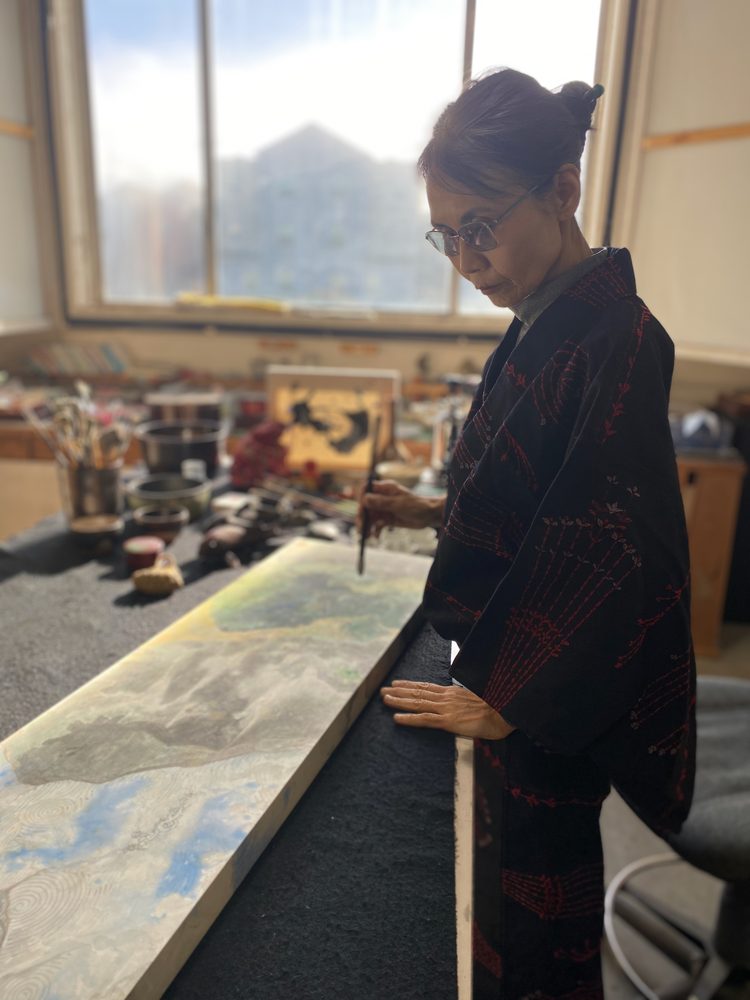
I work in sumi-e and Nihonga using materials drawn from the natural world — sumi made from soot and nikawa, pigments derived from minerals, shells, plants, and coral, along with pure gold. My Nihonga works are typically built on washi, including kozo and mashi (hemp paper), while many of my sumi-e works take shape on Xuan paper through direct and accumulated brushwork.
Through these means I explore invisible relationships between humans and the natural world, and the resonances that move across time, memory, and the threshold of the seen. The white serpent, the monarch butterfly, the forest at dusk: each holds a thread of the same conversation. Each is a study in metamorphosis — in the quiet ways that living things remain in relation across generations.
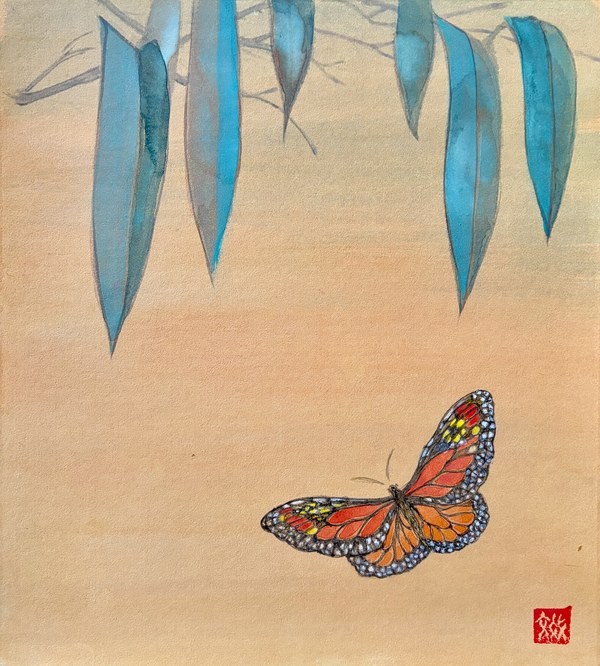
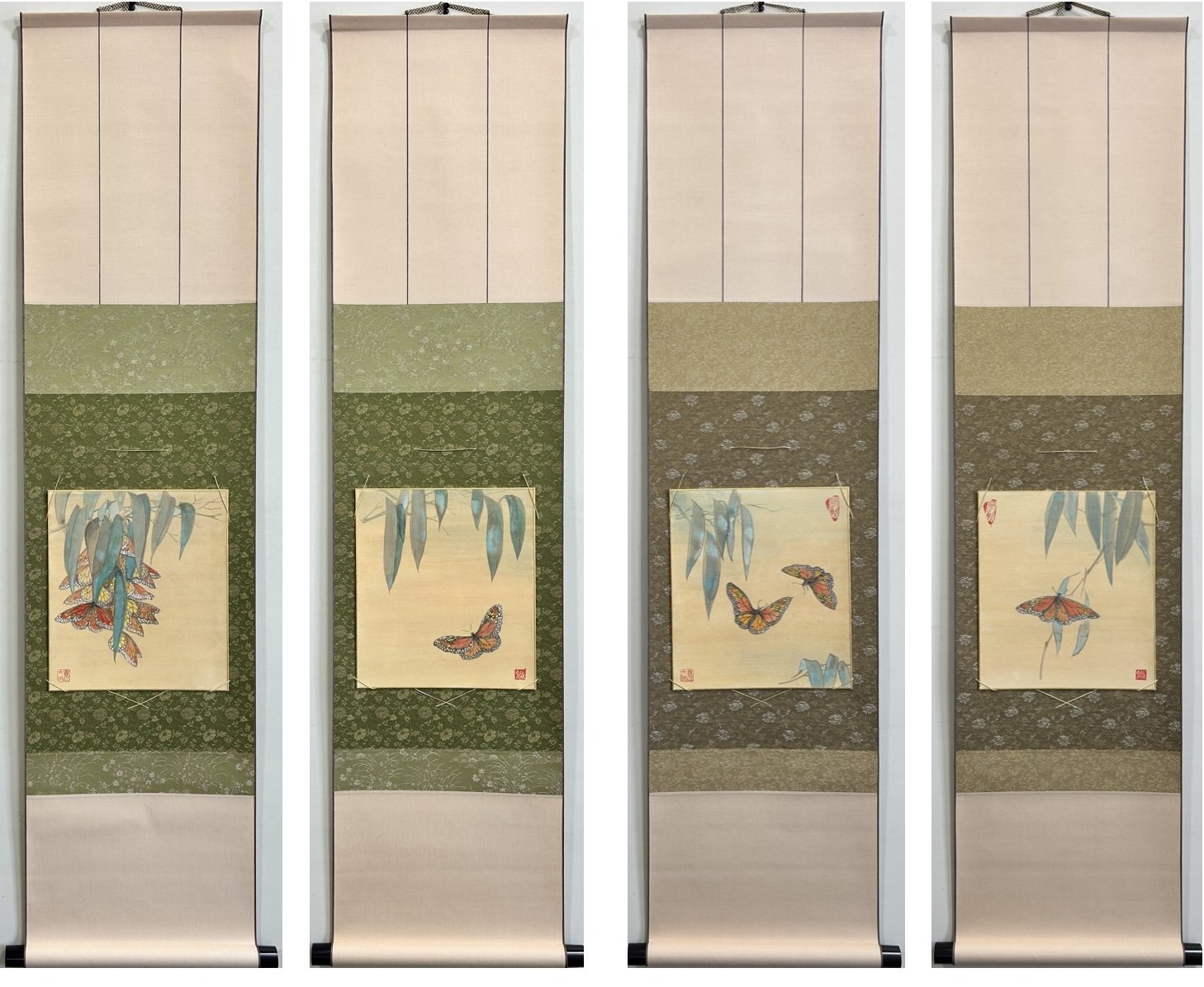
My recent body of work, Tsunagu — Threads of Continuance (2026), follows monarch butterflies through eucalyptus groves — a meditation on memory carried across migrations, and on the continuance of what cannot quite be named.
Throughout, the practice itself is a form of attention. The hakubyo (preparatory ink study) is not a draft but a breath; the finished work is not a destination but a return.
Fumiyo Yoshikawa is a Nihonga artist based in the San Francisco Bay Area. She was born in Japan, where she completed her formal training in classical Japanese painting at Kyoto University of Education (B.A., 1987) and continued her studies under the painters Okamura Rinkō, Ikeda Michio, and Ikeda Yōson within the Seitōsha school of the Shijō-Maruyama lineage (1987–2002).
In Japan, her work was selected for the Nitten (Japan Fine Arts Exhibition) at Tokyo Metropolitan Art Museum and Kyoto Museum of Art, and recognized in major regional and national competitions, including the Mayor of Kyoto Prize (1987) and the Kyoto Broadcasting Prize (1989). She held solo exhibitions at Gallery Mouri (Ginza, Tokyo) and Gallery Shiki (Kyoto).
Since relocating to the United States, her practice has expanded to include solo exhibitions in California, Colorado, and Guatemala, with recent shows at Gallery Hillgate (Kyoto, 2019, 2024) and the Nova Orbis Arte y Música Forum (Guatemala, 2024). She received the Best in Show — Painting Award (2021) and Best in Show — Calligraphy Award (2023) from the Sumi-e Society of America, among numerous other honors. Her work is held in the permanent collections of the Alameda County Art Collection, the Kyoto University of Education Library, and the Western Colorado Center for the Arts.
She was awarded an Arts in Residency Fellowship from the UCROSS Foundation in 2022. She has taught Nihonga and Sumi-e at the Asian Art Museum of San Francisco, Crocker Art Museum, Richmond Art Center, and Civic Arts Walnut Creek, and has been an invited instructor and juror nationally. In April 2026, her series Tsunagu — Threads of Continuance was presented at SF Art Fair 2026 at Fort Mason Center, San Francisco, through Arc Gallery SF.
Fumiyo Yoshikawa's work is represented by Arc Gallery SF (San Francisco, CA) and Ren Brown Collective Gallery (Bodega Bay, CA).
The pigments are drawn from the natural world — minerals including malachite and cinnabar, earth pigments, plant-derived pigments such as indigo and gamboge, animal-derived materials including coral and shell — all ground and bound with nikawa, the traditional binder. Sumi ink is central to the practice; pure gold is often used as a finishing element.
Nihonga works are typically built on washi, Japanese paper — kozo, mashi, and hosho among them — while many sumi-e works are painted directly on Xuan paper. Across paintings, works on paper, and installations, these materials carry traces of time, gesture, and accumulated memory.
The slow building of luminous layers from raw natural materials is inseparable from the meaning of the work. The materials carry place, history, and the body of the artist — they are not neutral, and they ask for time.
最近の展示・お知らせ
2026 · May 30
The Orchard Gallery, 489 25th St, Oakland · 11am–5pm. Tsunagu — Threads of Continuance on view in person. Oakland Art Murmur opening night.
2026 · June 13–14
1021 Broadway Ave. #205A, San Pablo, CA · 11am–4pm. Both pieces of Tsunagu — Threads of Continuance together for the first time.
2026 · June 20 – July 18
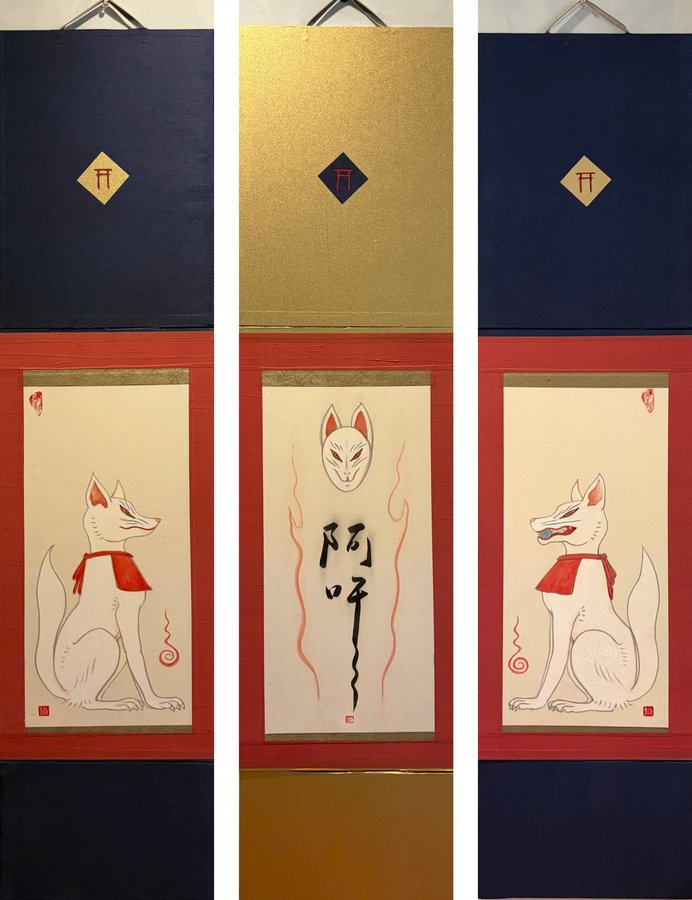
Arc Gallery SF, 1246 Folsom Street, San Francisco. Opening Reception: Saturday, June 20, 7–9 PM. Showing Tōryanse — The Gate, a hanging scroll triptych. Kakejiku mounting by Liza Dalby.
2026 · April 16–19
Tsunagu — Threads of Continuance presented through Arc Gallery SF at Fort Mason Center, San Francisco.
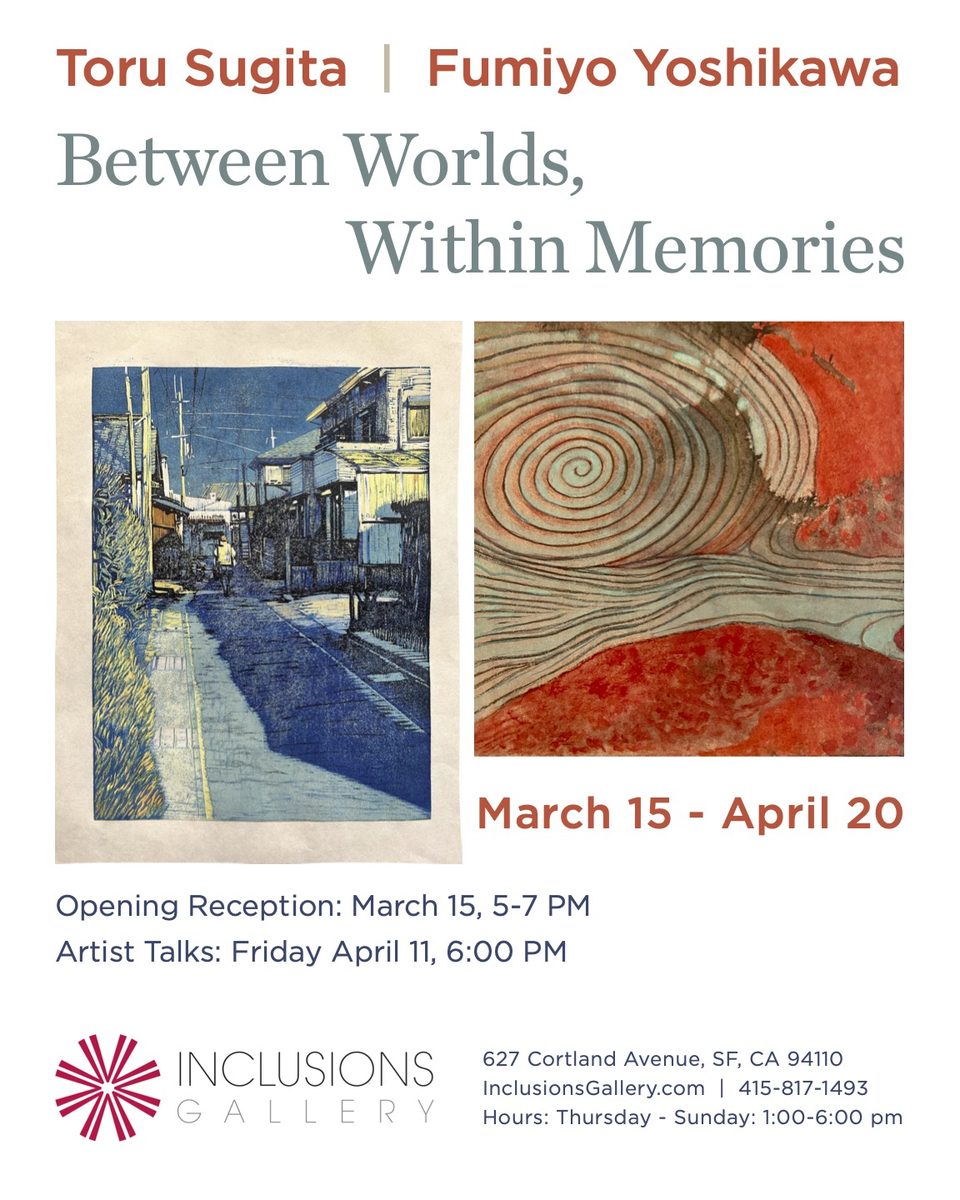
2025
Two-person exhibition with Toru Sugita at Inclusion Gallery, San Francisco. Featuring Vital Energy — Rebirth and Revival.
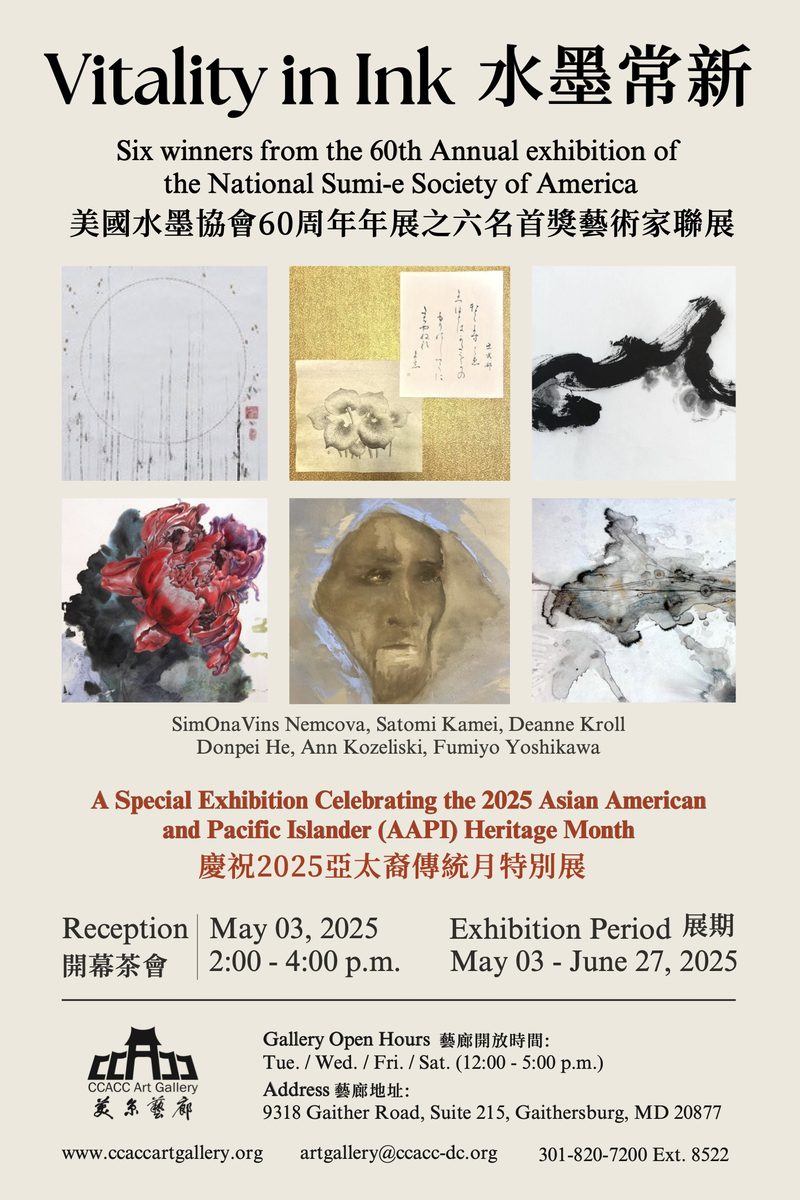
2025
Six Winners from the 60th Annual Sumi-e Society of America Exhibition · CCACC Art Gallery, Gaithersburg, MD.
展覧会・受賞・コレクション
日本(抜粋)